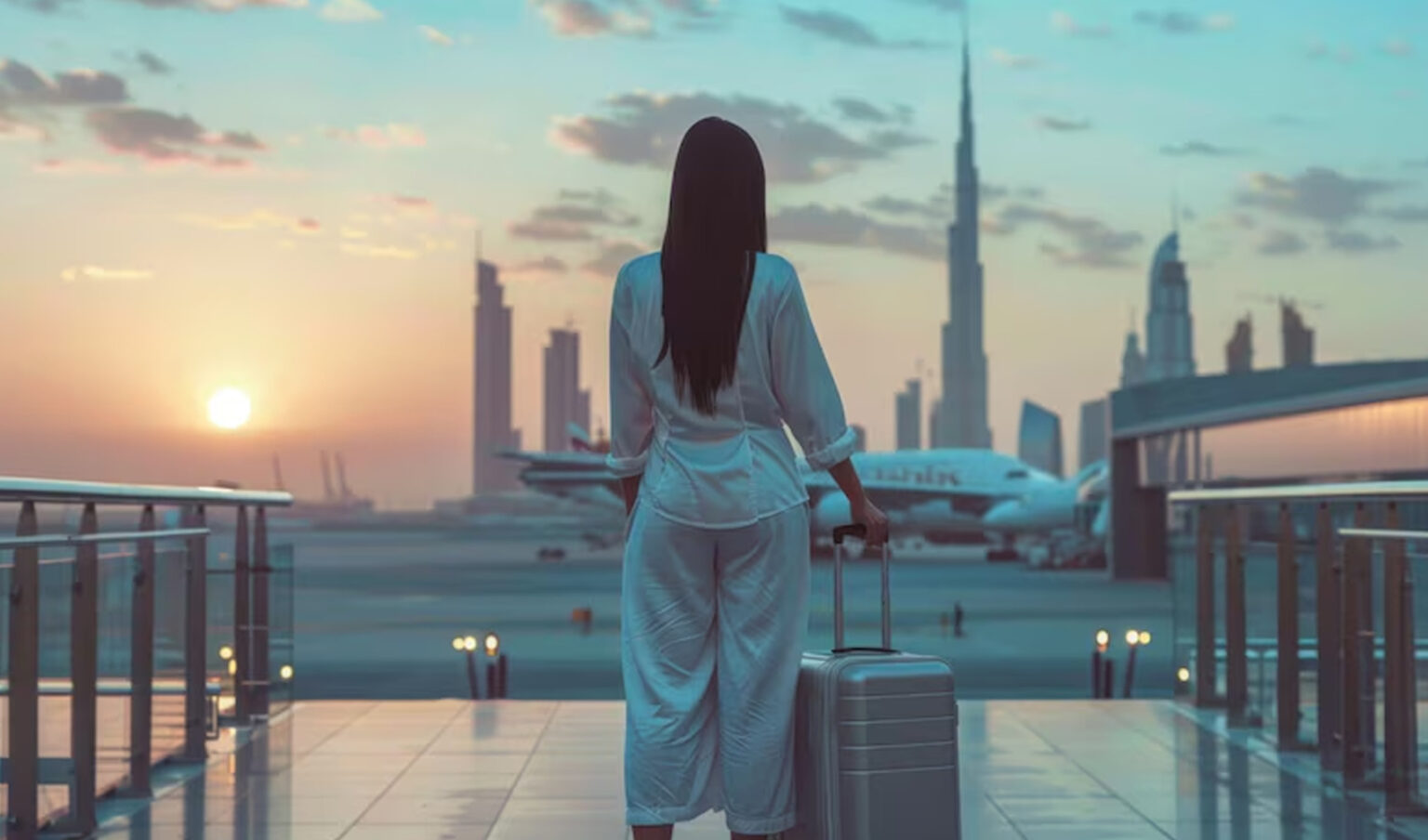
Dubai is a major global aviation hub. Dubai International handled 95.2 million passengers in 2025, its busiest year on record, and easier entry rules like the visa-free travel initiative for Gulf residents keep adding to that traffic. This guide covers the city's two airports, what each offers, how they connect to the city and why they matter for property.
How Many Airports Are in Dubai?
Dubai is home to two major airports: Dubai International Airport (DXB) and Al Maktoum International Airport (DWC). Between them they connect the city to destinations around the world.
Dubai International Airport (DXB):
- Location: DXB sits in the Al Garhoud district, just a few kilometers from the city center, so it is easy to reach. Terminal 1 and Terminal 3 each have a Dubai Metro Red Line station. Terminal 2 does not, so allow for a taxi or road transfer there.
- Facilities: DXB has duty-free shopping, restaurants and lounges. It is also home to the world’s largest airport terminal, Terminal 3, which is used exclusively by Emirates Airlines.
Al Maktoum International Airport (DWC):
- Location: Located in Jebel Ali, DWC is part of the Dubai South development project. Under Dubai’s official expansion plans, DWC is set to become the world’s largest airport. Its first phase is planned to handle up to 150 million passengers a year, and the fully built airport, with five runways, as many as 260 million. The first major phase isn’t expected online until the early 2030s.
What is Dubai’s Main Airport Called?
Dubai’s main airport is called Dubai International Airport (DXB). In 2025 it handled 95.2 million passengers, and it ranks as the world’s busiest airport for international traffic. That makes it the main hub for international travel to and from the city.
Why is Dubai Called DXB?
The airport code DXB is derived from the city’s name, with “DXB” being a stylized abbreviation for Dubai. Airport codes are typically three-letter identifiers assigned by the International Air Transport Association (IATA), and “DXB” is now the standard shorthand for Dubai International Airport.
Why is Dubai Airport Famous?
Dubai Airport stands out for several reasons:
Architecture and Design:
- Terminal 3 at Dubai International Airport (DXB) is one of the largest buildings in the world by floor space.
Amenities:
- Passengers have lounges, extensive duty-free shopping and a wide range of dining options. Dubai Airport Terminal 2 Arrivals has its own hall and operates separately from Terminals 1 and 3.
Connectivity:
- DXB serves as a major hub for Emirates Airlines, connecting passengers to over 150 destinations worldwide. That makes it a gateway between the East and the West.
Efficiency and Technology:
- Dubai International Airport uses automated check-in counters and biometric immigration systems to move passengers through faster.
The Role of Dubai’s Airports in Real Estate Development
The development of Dubai’s airports has affected the real estate market. Proximity to these airports adds to the appeal of residential and commercial properties, part of a wider pattern of infrastructure projects that benefit property investors. Real estate developers in Dubai, such as Shapoorji Pallonji Dubai, use the location of properties near these airports to attract buyers and investors. Shapoorji Pallonji Dubai is one such developer, building residential properties for city living. The connectivity of Dubai International Airport DXB and Al Maktoum International Airport (DWC) keeps residents and businesses linked to global markets.
Conclusion
Dubai’s airports are more than transit points. They are tied to the city’s identity and growth. Dubai International Airport (DXB) handled 95.2 million passengers in 2025, and Al Maktoum International Airport (DWC) is still being expanded, with a capacity target of 260 million passengers a year. The airports shape how Dubai connects to the rest of the world, and that matters to travelers, residents and investors alike.