
Welcome to the future of real estate, Dubai!
Dubai's property market has undergone major transformation over the past several years, and the legal framework behind it, the Dubai Land Department (DLD), RERA, and the Strata Law, remains the foundation buyers and investors deal with today. As one of the most sought-after locations for investors and homeowners alike, it’s no surprise that the laws surrounding Dubai’s property market keep evolving.
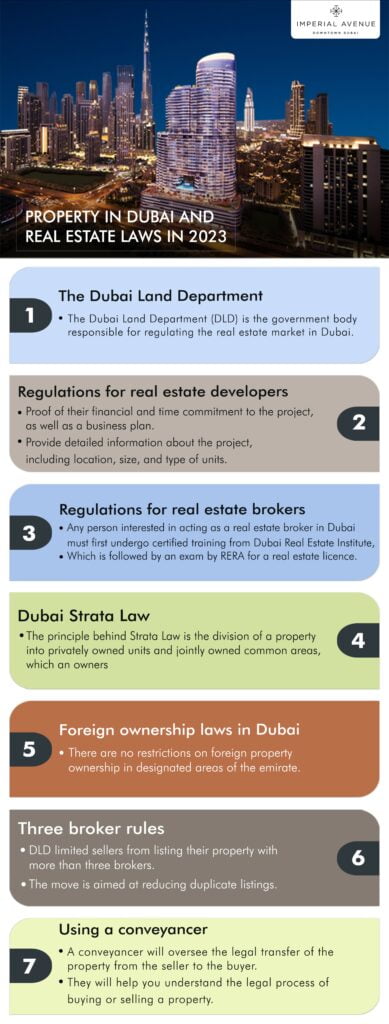
Click Here to Enlarge
From ownership regulations to the innovative technologies brought forth by property developers in UAE these rules continue to shape the market. Here’s what to know about Dubai’s core property and real estate laws, still the framework governing transactions today.
The Dubai Land Department
The Dubai Land Department (DLD) is the government body responsible for regulating the real estate market in Dubai. The DLD’s main role is to protect the rights of property buyers and sellers and ensure that all real estate transactions are conducted fairly and transparently.
The DLD oversees all aspects of the Dubai property market, from the registration of ownership rights and titles to issuing construction permits and licences. The department also regulates the activities of real estate brokers and developers and monitors compliance with quality standards in the construction industry.
The Real Estate Regulatory Authority (RERA) is a subdivision of the DLD responsible for setting the laws and regulations in the real estate section. Their duties are inclusive of:
- Collection of all details surrounding landlords and tenants and providing resolutions in case of disputes.
- Regulation of foreign investments in Dubai.
- Licensing of real estate brokers and developers.
- Monitoring of banks, insurance, and law companies within the real estate industry.
- Monitoring and management of any real estate market development.
Regulations for real estate developers
All real estate developers in Dubai are required to be registered with the Dubai Real Estate Regulatory Agency (RERA). In order to register, developers must provide proof of their financial and time commitment to the project, as well as a business plan.
Once registered, developers must comply with all RERA regulations; property developers in Dubai must first obtain a licence from RERA before starting any real estate project. The law also makes it necessary for them to provide detailed information about the project, including location, size, and type of units. This includes advertising guidelines, disclosure of information, and dispute resolution. Developers must also set up an escrow account for each project, into which buyers must pay their deposit. This is a safeguard to ensure that all funds deposited are used towards the completion of the project only.
It goes without saying failure to comply with the RERA regulations can result in fines or suspension of the project. Escrow enforcement has only tightened since: developers now need verified, milestone-linked engineering reports before drawing on buyer funds, and RERA requires 5% of a project's total value to stay locked in escrow for a full year after handover, extra protection for buyers against unfinished common-area work.
Regulations for real estate brokers
Another important law that governs the real estate industry is Bylaw No. (85) of 2006, Regulating the Real Estate Brokers Register in the Emirate of Dubai. This law regulates all activities of brokers in the emirates.
According to the law, any person interested in acting as a real estate broker in Dubai must first undergo certified training from Dubai Real Estate Institute, followed by an exam by RERA for a real estate licence. A licensed broker must follow the set of rules and regulations listed under the Bylaw No. 85.
The term ‘real estate broker’ or ‘property agent’ covers any legal person who carries out activities related to intermediation in real estate transactions, including:
-Searching for a property according to the client’s specifications
-Negotiating and mediating between buyers and sellers
-Preparing and checking sales contracts
-Providing professional advice on real estate matters.
Dubai Strata Law.
The main principle behind Strata Law is the division of a property into privately owned units and jointly owned common areas, which an owners association further manages. This real estate law only applies to multi-unit developments, namely apartments, and townhouses.
The primary purpose of the law is to set the rules and regulations for the management and maintenance of common areas and facilities in multi-unit developments.
Foreign ownership laws in Dubai
Dubai’s foreign ownership laws are some of the most relaxed in the world, making it an attractive destination for international investors. There are no restrictions on foreign property ownership in designated areas of the emirate, making it easy for foreigners to buy and sell property in the city. The policy is designed to drive more foreign investment into the real estate industry, which bolsters the city’s reputation as a desirable destination for property investment.
Buying property in Dubai is relatively simple and straightforward, and many options are available to suit all budgets, though it still pays to know the common mistakes buyers make before signing anything. Whether you’re looking for a luxury villa overlooking Palm Jumeirah, a modest 3-bedroom apartment in Dubai, or apartments facing Burj Khalifa, something will surely suit your needs. One thing to note is that foreign investors must obtain approval from the DLD before purchasing the property.
Three broker rules
Under the three broker rule, DLD limits sellers to listing their property with a maximum of three registered brokers, each holding a signed authorisation ("Form A") from the seller. The rule reduces duplicate listings (multiple agents advertising the same property) and gives professional brokers and agencies a clearer mandate to work with, which is part of why buying through a registered broker carries real protection. Every online listing must now also carry a valid RERA permit number issued through the Trakheesi system, which lets buyers verify that a listing is genuine and that the broker holds an active RERA card before they ever pick up the phone.
Using a conveyancer
When you are buying or selling a property in Dubai, it is important to use a qualified and experienced conveyancer. A conveyancer will oversee the legal transfer of the property from the seller to the buyer. They will also help you understand the legal process involved in buying or selling a property and can also provide guidance on the best way to protect your interests, from drafting and reviewing the contract terms to carrying out the various complex legal, financial, and administrative duties required.
The first step in using a conveyancer is to find one that is registered with the Dubai Land Department (DLD). You can search for registered conveyancers on the DLD website. Once you have found a few potential candidates, meeting with them to discuss your specific needs is important.
When meeting with a conveyancer, be sure to ask about their experience in dealing with property transactions in Dubai. It is also important to ask about their fees and whether they
offer any discounts for bulk work. Once you have selected a conveyancer, they will begin work by preparing the necessary documentation for your transaction.
The documentation required for a property transaction in Dubai includes:
* A contract of sale
* A title deed
* An authority letter
* A registration form
* A mortgage letter (if applicable, and worth comparing fixed vs variable mortgage rates before you commit to one)
* Property insurance documents (if applicable)
Your conveyancer will also help with practical steps like securing a No Objection Certificate from the developer, and will liaise with the relevant authorities on your behalf, such as the Dubai Land Department and the Dubai Municipality. They will ensure that all of the required paperwork is completed and submitted correctly and will follow up on any outstanding issues that need to be resolved.
Conclusion
Dubai's property and real estate laws continue to offer real advantages for both investors and residents. This regulatory framework, DLD oversight, RERA licensing, escrow protections, and Strata Law for multi-unit developments, is what keeps Dubai an attractive option for anyone looking to invest in or purchase property here. And we believe now is a good time to make your move into this incredible city with a home like Imperial Avenue Downtown Dubai by Shapoorji Properties..