Dubai is a city where old and new sit side by side, and where many cultures and cuisines meet. This infographic blog takes you through the diversity of Dubai’s top neighbourhoods, from the heritage-rich alleys of Old Dubai to the waterfront homes of the Palm Jumeirah.
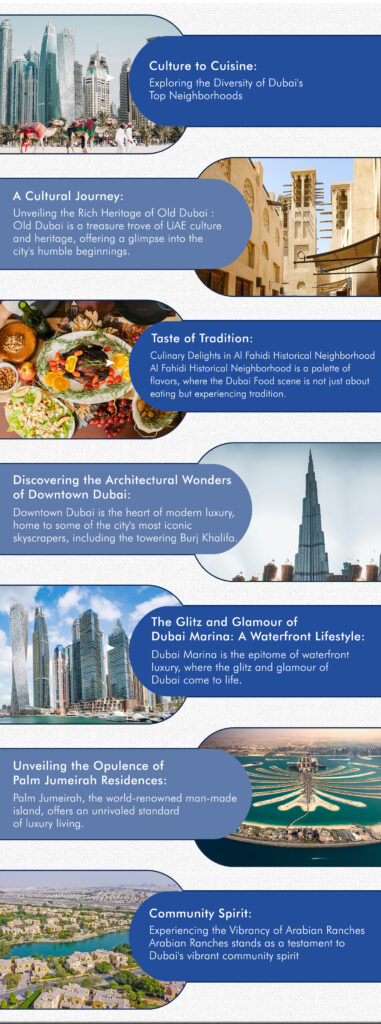
Old Dubai: Heritage and Culture
Old Dubai shows how the city began. It is part of the broader mosaic of cultures that defines the city's identity today. In its lanes you find traditional markets, historic forts, and ancient trading ports, each with its own story.
Al Fahidi Historical Neighborhood: Emirati Food
Al Fahidi Historical Neighborhood is known for authentic Emirati cuisine, served against a historic backdrop. Dining here is a way to experience tradition, through the spices, aromas, and tastes that define the region.
Downtown Dubai: Modern Architecture
Downtown Dubai is home to the Burj Khalifa and, at its base, the Dubai Mall. This area represents the ambitious spirit of Dubai real estate, with architecture that blends innovation with luxury. The neighborhood is also a hub for arts, culture, and entertainment.
Dubai Marina: A Waterfront Lifestyle
Dubai Marina is a waterfront district of skyscrapers and yachts, with a promenade of upscale dining and shopping options. Living here means marina views as the daily backdrop.
Palm Jumeirah: Luxury Residences
Palm Jumeirah is a man-made island of villas and high-end apartments with views of the Arabian Gulf. The lifestyle includes private beaches, high-end amenities, and exclusivity. These are the same qualities that put larger, family-sized luxury apartments in demand across the city. For those looking to buy an apartment in Dubai, Palm Jumeirah offers the top end of waterfront living.
Arabian Ranches: A Family Community
Arabian Ranches is a quiet escape from the city, with spacious homes, green parks, and a tight-knit community. Families find a sense of belonging, with amenities and facilities for everyday life. It is also one of several desirable locations worth considering for property investment.
The Neighbourhoods Side by Side
Heritage and food make a good first impression, but a home is a longer commitment. This table sets out the basics for each area.
| Neighbourhood | What you live in | Getting around | Price per sq ft | Yield |
|---|---|---|---|---|
| Old Dubai and Al Fahidi | Older buildings in Bur Dubai and Deira | Dubai Metro Green Line | No confirmed figure | No confirmed figure |
| Downtown Dubai | Apartments in towers | Red Line, Burj Khalifa/Dubai Mall station | AED 3,011 | 5.10% |
| Dubai Marina | Apartments in towers | Red Line, Sobha Realty station, and the Dubai Tram | AED 2,058 | 5.51% |
| Palm Jumeirah | Apartments, townhouses and villas | Monorail to the Dubai Tram, no direct Metro link | AED 4,240 for apartments | 4.58% |
| Arabian Ranches | Villas and townhouses | By car | AED 2,417 for villas (Arabian Ranches 1) | 4.00% |
Price per sq ft is the Property Monitor average from Dubai Land Department transactions between 1 January and early June 2026. Yield is annual rent as a share of the price, as of August 2026. Both are published by Engel & Völkers. Averages cover every building in an area, so a tower with sea views can sit well above them.
What Living There Is Like
Old Dubai and Al Fahidi. The Al Fahidi Historical Neighbourhood sits on Dubai Creek in Bur Dubai. Its lanes are free to walk, with wind towers, restored courtyard houses, galleries and the Coffee Museum. The Sheikh Mohammed Centre for Cultural Understanding runs guided tours and heritage meals, the easiest way to try Emirati food here. The historic houses are heritage buildings, so living nearby means the older streets of Bur Dubai and Deira. It suits people who want character and the creek on their doorstep.
Downtown Dubai. Emaar built Downtown on about 2 square kilometres. The Burj Khalifa stands 828 metres tall, the Dubai Mall has around 1,300 stores, and the 2,000 seat Dubai Opera is close by. Homes are apartments. It suits people who want to walk to dinner or the mall and accept busy weekends and event crowds.
Dubai Marina. The Marina covers about 4.9 square kilometres around a canal along 3 km of coast, with nearly 8 km of public walkways. The Walk at JBR adds 1.7 km of shops and cafes. It is almost entirely apartments, and the Metro and Tram make a car optional. It suits people who want a waterfront apartment and can live without a garden.
Palm Jumeirah. The first homes were handed over in 2006. The island has about 30 hotels, and a 5.4 km monorail, open since 2009, links it to Gateway on the mainland. Homes range from small apartments to villas of up to 10 bedrooms. It is the dearest area here and has the lowest apartment yield, so it is bought for lifestyle and long-term value.
Arabian Ranches. Emaar launched it in 2004. Arabian Ranches 1 has over 4,000 villas and townhouses, and Arabian Ranches 2 adds more than 1,700. It has an 18-hole golf course, an equestrian centre and two schools teaching the English National Curriculum. It suits families who want a garden and a school close by, and who will drive into the city.
Choosing Between Them
Rent first if you can. A month in a neighbourhood tells you more about noise, traffic and daily life than a viewing does. Yield and lifestyle also pull in different directions: the Marina yields 5.51% and Arabian Ranches 4.00%, but the lower-yielding area gives you more space. Dubai prices are about 3 to 4% below a year earlier, so there is time to compare. Our guide to how the Dubai Metro affected nearby property and the locations we cover are good places to start. For a shortlist, book a consultation.
These neighborhoods show how different parts of the city can be: heritage in Old Dubai, Emirati food in Al Fahidi, architecture in Downtown Dubai, the waterfront in Dubai Marina, luxury homes on Palm Jumeirah, and a family community in Arabian Ranches. As the city grows, its neighborhoods keep changing.
FAQs
Which Dubai neighbourhood is best for families?
Arabian Ranches is built for it, with villas and townhouses, two schools, a golf course and an equestrian centre. Palm Jumeirah also has villas, at a much higher price per sq ft.
Which of these neighbourhoods have Metro access?
Downtown has Burj Khalifa/Dubai Mall station on the Red Line, and Dubai Marina has Sobha Realty station plus the Dubai Tram. Old Dubai is served by the Green Line. Palm Jumeirah links to the Tram by monorail but has no direct Metro. Arabian Ranches has no Metro, so most residents drive.
Which neighbourhood has the highest rental yield?
Of the four areas with figures, Dubai Marina leads at 5.51%, then Downtown at 5.10%, Palm Jumeirah at 4.58% and Arabian Ranches at 4.00% (Property Monitor, August 2026). Higher yields usually come with a lower price per sq ft.
Is Downtown or Dubai Marina cheaper to buy in?
Dubai Marina. Apartments average AED 2,058 per sq ft against AED 3,011 in Downtown, based on transactions from January to early June 2026.