

The UAE's labour law overhaul under Federal Decree Law No. 33 of 2021 is no longer new, but it's still the framework governing every private-sector job in the country, and MOHRE has kept amending and enforcing it since. It applies in Dubai, Abu Dhabi and the rest of the UAE alike. Knowing the UAE employment law protects your rights and keeps you compliant as the regulations evolve. For a broader look at how the country's work culture and employment policies shape everyday life on the job, it's worth reading alongside these labour law updates. The law is supported by executive regulations and cabinet resolutions, which detail its implementation and ensure legal compliance.
What Changed, and What's Changed Since
Federal Decree Law No. 33 of 2021 remains the landmark law redefining labour relations across the UAE, having moved the market from unlimited-term to fixed-term contracts as standard. It's been amended since: Federal Decree-Law No. 9 of 2024, effective 31 August 2024, revised Articles 54 and 60 to give MOHRE binding decision-making authority over employment disputes up to AED 50,000 and raised the ceiling on per-violation penalties to AED 1 million, with fines multiplying where multiple workers are affected by the same violation (fictitious hiring or collusion cases, for example). Both changes are now in full effect.
One of the most significant shifts is the move from unlimited term contracts to fixed term contracts, making employment agreements more transparent and predictable. This change affects every sector, from retail companies to domestic workers and the broader private sector. The law also allows more flexible working hours and employment arrangements.
The Ministry of Human Resources and Emiratisation (MOHRE) oversees the implementation and enforcement of the new law. Employers and employees both need to understand these updates to stay compliant and to use what the law provides. The aim is a fairer, more flexible workplace across the UAE.
Gratuity Revamp: Smarter & Fairer
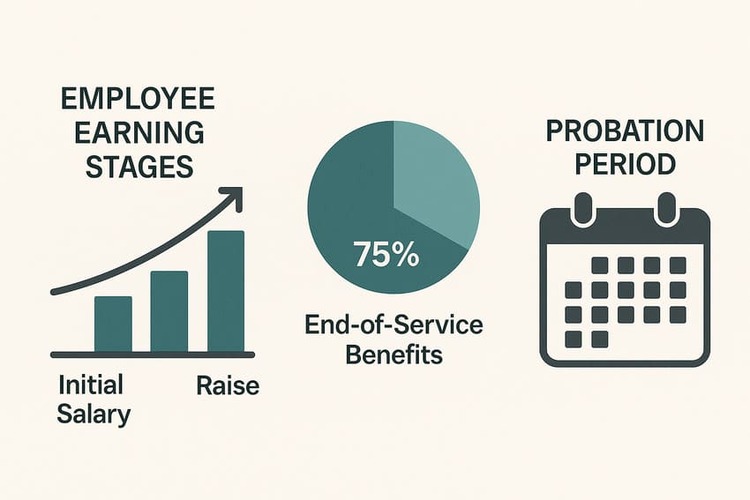
One of the most significant changes brought in by the 2025 UAE labour law reforms is the modification to end-of-service gratuity (EOSG), still the rule today:
- Eligibility: Gratuity is payable once a worker has completed one year of continuous service.
- Pro-rata calculations: After the first year, part years count in proportion to the months actually worked.
- Ceiling on EOSG: For high earners, total gratuity is capped at two years of basic wage.
Under the new law, gratuity cannot be withheld even if an employee forfeited their position due to summary termination. This ensures that all workers receive their end-of-service benefits fairly, regardless of the reason for termination.
What this means: If you switch jobs after a year or stay long-term, EOSG now follows clearer and fairer rules.
Clearer Probation Rules
Probationary terms have always caused confusion, but the UAE employment law clarifies things:
- Maximum 6 months on probation.
- Employers must issue a formal probation period agreement
- Dismissals during probation now require a probation period notice of 14 days for termination, unless there is gross misconduct.
Why it matters: You can no longer be dismissed arbitrarily during probation. The clearer rules protect new hires and build trust.
Flexible Contracts & Gig Work

As the UAE has grown into a major gig economy hub, the law accounts for this.
- Fixed‑term and part‑time contracts now have clearer definition and application. The law now recognizes various work models, including job sharing and temporary work, in addition to fixed-term and part-time contracts.
- Enhanced guidelines protect freelancers, gig workers, and project-based staff doing work through platforms like Careem or Talabat.
Existing employees on unlimited term contracts must transition to the new fixed-term contract system within the legal deadline. For newcomers weighing a permanent move, our practical relocation tips for Indians moving to Dubai cover many of the same employment and settling-in questions.
What workers gain: Greater clarity around contracts, fairer working hours, and stronger protection, especially for those working outside traditional corporate structures.
Digital Payslips & Enhanced Transparency
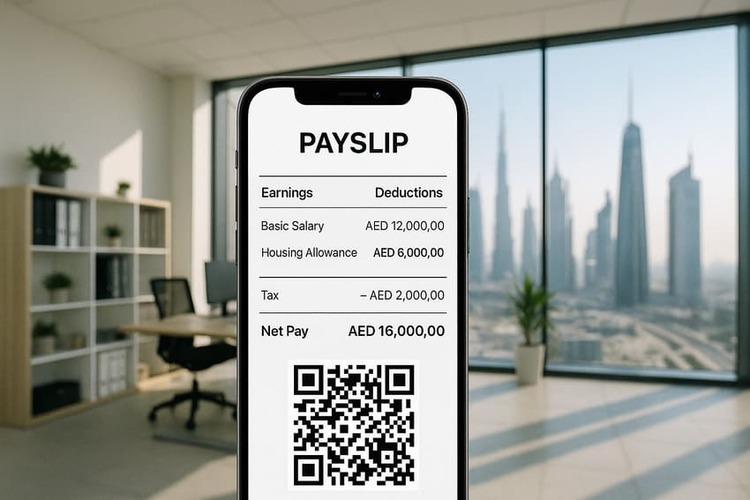
In line with the UAE’s digital transformation, the UAE employment law requires:
- Payslips delivered digitally via email, tablet, or secure systems.
- Must include itemized breakdowns: basic salary, allowances, overtime pay, deductions, leave balance, and overtime.
Why it matters: Workers get clarity into their pay and career progress, which helps with visa renewal, portability or financial planning.
Leave Entitlements: More Time for You
The UAE labour law sets out leave entitlements in detail. Employees now get enhanced maternity leave: 60 calendar days in total, with 45 days at full pay and the following 15 days at half pay.
The law also introduces parental leave, compassionate leave and study leave. Annual leave and rest days are clearly defined, and flexible work arrangements are encouraged.
The law also requires equal pay for men and women performing the same work. Employers are now required to update their employment contracts and HR policies to reflect these new entitlements.
New Termination Clauses & Notice Requirements
Termination rules under the law ensure a fairer process for employees:
- Notice periods: Employers must provide:
- 14 days’ written notice when terminating during probation.
- At least 30 days’ notice after probation, up to a maximum of 90 days as set in the contract.
- Final salary must be paid in full on termination, with no delays.
- Special provisions protect pregnant workers, those on maternity leave, and individuals on medical leave.
- Termination must be based on legitimate reasons, such as non-performance or redundancy, and summary dismissal is only allowed under specific legal grounds.
- Protections apply to employees during pregnancy or maternity leave, and summary dismissal does not affect end-of-service gratuity entitlements.
- If an employer terminates an employee in breach of legal obligations, non-compete clauses may become unenforceable.
- When a new employer hires an employee during or after probation, they may be responsible for certain recruitment costs.
What employees gain: More time to handle transitions, better severance clarity, and stronger protection for vulnerable demographics.
Power to Resolve Disputes Faster
The UAE labour law provides for faster, more transparent dispute resolution, and MOHRE now has binding authority over claims up to AED 50,000:
- Claims can be filed within two years (extended from one year).
- Virtual hearings and dedicated labour dispute portals help expedite resolution.
- Labour disputes that are not resolved through initial channels can be escalated to UAE labour courts.
- Fines for non-compliance from employers are now stricter.
- Cases involving larger claims or complex issues may be referred to the competent court for final resolution.
What workers benefit from: Quicker justice, fewer delays, and a stronger sense of fairness in the system.
Daily Working Hours & Wellness
Employee welfare is protected under the law as follows:
- Maximum working hours set at 8 per day, unless the contract specifies otherwise. Exceptions to this limit are allowed only in exceptional circumstances, as defined by law.
- Work hours may be adjusted in cases of exceptional circumstances, but must remain within legal limits.
- Remote working arrangements such as hybrid models recognized with protections.
- Wellness programs and flexible schedules now encouraged; no deductions for minor absences.
Why this matters: Better work-life balance, clearer boundaries, and support for mental health.
Digital Health Records & Wellness Benefits
Continuing push for digitalization:
- Employers must issue digital health certificates, including COVID or flu vaccination status when relevant, which must be issued by a recognized medical authority.
- Annual health checkups required for high-risk jobs.
- Ongoing mental health support is encouraged.
Impact: Modern, safe workplaces where employee well-being is a legal priority.
Wage Protection Program (WPS) Enhancements
The WPS operates with these safeguards in place:
- Full compliance with mandatory digital salary transfers via banks or fintech.
- Hefty penalties for delays or underpayment.
- Workers can lodge complaints simply through WPS dashboards.
Additionally, the law allows the Cabinet, upon the Minister’s proposal and in coordination with relevant authorities, to set or revise the minimum wage for workers, ensuring fair compensation.
What employees gain: Faster, transparent, and fully traceable salary payments.
Inclusive Gender & Protection Policies

The UAE employment law strongly addresses inclusivity:
- Increased maternity leave (60 days, 45 at full pay and 15 at half pay).
- Career breaks protected for women returning from maternity leave.
- Equal pay provisions for equal roles.
- The law prohibits discrimination based on national origin and social origin.
- Protections against sexual harassment and psychological violence are now explicitly covered.
- Special mention of protections for LGBTIQ+ employees in the private sector (without altering public stance).
- Members of the armed forces are exempt from certain employment law provisions.
A more fair, inclusive workplace, regardless of gender, health, or lifestyle.
Compliance Made Simple: What Employers & Employees Must Do
Staying compliant with the new UAE labour law is essential for both employers and employees. For employers, this means reviewing and updating all employment contracts, policies, and procedures to align with the latest legal requirements. Any changes to working hours, salary, or job title must be communicated to employees in writing, ensuring transparency and legal compliance.
Employees should familiarize themselves with their rights and obligations under the new law, including entitlements to leave, notice periods, and end of service gratuity. The law now requires a minimum notice period of 14 days for termination during the probation period, and at least 30 days’ notice after probation ends. Understanding these notice periods and the updated rules around end of service gratuity is key to protecting your interests.
Both employers and employees can seek guidance from the Ministry of Human Resources or consult with HR experts to ensure they remain compliant and avoid any potential legal trouble. Businesses juggling these HR updates alongside the UAE's 2025 corporate tax changes will want to keep both compliance calendars in sync. Adapting early to the new law keeps both sides on firm legal ground.
What These Changes Mean for You
These rules aren’t just legal jargon. They have real-life impact:
| Your Situation | Impact |
|---|---|
| You’re early in a job | Gratuity starts once you complete one year of service, and part years count pro rata after that. |
| On probation? | You can’t be terminated without cause or notice. |
| Freelancers or part-time | Now have contract clarity and labour protection fit for the gig era. Certain employment actions, such as contract changes, may require the worker’s written consent. |
| Worried about pay history | Digital payslips WPS data make your financial history verifiable. |
| Concerned about health | Required digital health certifications and wellness expectations. |
| Family planning? | Longer maternity leaves and better reentry options post-pregnancy. Parental leave is available within six months of a child’s birth. |
| Unused leave? | Carrying forward unused leave requires the employer’s approval. |
FAQ’s
1. What are the major changes in UAE labour law for 2025?
Key changes include revised gratuity payments, new flexible work contracts, updated probation rules, digital payslips, and stronger termination protections. Understanding your employment contract is key under the new UAE labor rules. For those interested in changes impacting tenants, you can learn more about the Dubai Rent Increase Notice 2025 and how rent regulations will affect both tenants and landlords.
2. How has the gratuity system changed in UAE for 2025?
Gratuity is calculated on basic wage at 21 days per year for the first five years and 30 days per year after that, capped at two years of basic wage in total.
3. What is the new rule for probation periods in the UAE?
Employers must now give a 14-day notice for termination during probation. Employees must give 14 days’ notice if leaving the country, or one month if moving to another UAE employer.
4. What types of employment contracts are allowed in the UAE in 2025?
UAE now allows flexible, part-time, temporary, and freelance contracts alongside standard full-time ones, offering greater flexibility for both parties. All employment contract types are governed by the UAE labor law, ensuring that both employers and employees are protected under the latest regulations.
5. Are digital payslips mandatory in the UAE now?
Yes. From 2025, employers must issue itemized digital payslips, ensuring transparency and ease of record-keeping for employees.
6. What are my rights if I’m terminated under the new UAE labour laws?
Terminations now require justifiable cause, and unfair dismissals may lead to employee compensation under updated legal guidelines. UAE labor laws protect employees from unfair dismissal, reinforcing employee rights in the UAE labor market.
7. Can I work two jobs legally under the new UAE labour law?
Yes. With the proper work permits, you can hold multiple part-time jobs under the UAE’s new flexible employment system.
8. How do the UAE labour law changes impact women and maternity leave?
The new law strengthens women’s workplace rights, including extended maternity leave and protection from termination during pregnancy.
9. How do these updates affect expats working in Dubai?
Expats benefit from clearer contracts, stronger worker protections, and easier processes for remote and freelance work across UAE sectors, including access to residential projects in Dubai.
10. Where can I check if my UAE employer complies with the new labour laws?
You can verify employer compliance via the MOHRE (Ministry of Human Resources & Emiratisation) portal or seek help through registered HR consultants. UAE businesses must ensure compliance with the latest labor law requirements to avoid penalties and maintain a fair workplace under UAE labor regulations.
Knowledge Is Power
These reforms move the UAE job market towards clearer contracts and stronger worker protections. Know your rights and understand the new protections, so you can look after your career.