Returns on UAE real estate depend on five factors, and seasoned investors and newcomers to the property market both need to understand them. This post sets out each one and how it affects what an investment earns.
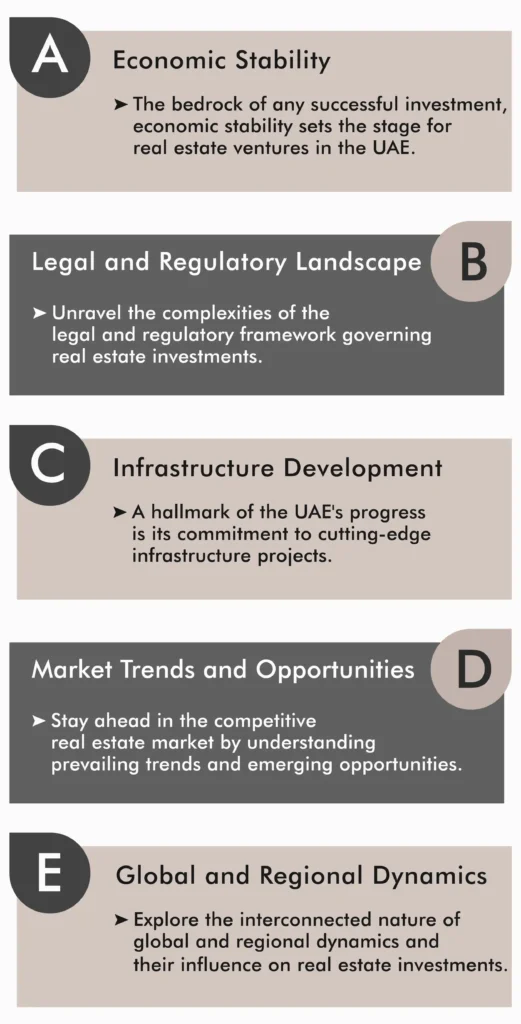
Here are the 5 Factors Affecting Returns on Real Estate Investments in UAE:
Economic Stability:
Economic stability is the base for any investment, and property in the UAE is no exception. The country’s economic foundation, backed by diversification initiatives, creates conditions that suit property investment.
Legal and Regulatory Framework:
The legal and regulatory framework governs real estate investments. Investor-friendly regulations, such as those supporting foreign investors, play a significant role in attracting capital to the UAE’s property sector.
Infrastructure Development:
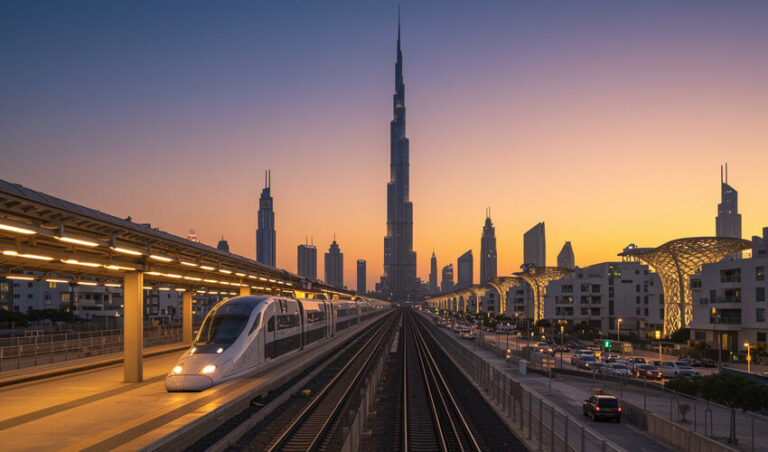
The UAE has committed to major infrastructure projects. Look at the impact of ongoing infrastructure developments on the property market: strategic infrastructure initiatives add to the value and appeal of properties.
Market Trends and Opportunities:
In a competitive market, understanding prevailing trends and emerging opportunities keeps you ahead. That means knowing which sectors and projects, including residential developments by property developers Shapoorji Properties, offer promising returns.
Global and Regional Influences:
Global and regional influences also affect real estate investments. Geopolitical factors and regional collaborations shape the property market and, with it, investment returns. These forces also explain why a growing number of European investors are turning to the UAE.
What the Costs Look Like in Dirhams
A return is what is left after costs, so start with them. When you buy, the Dubai Land Department registration fee is 4% of the price, and the registration trustee office charges AED 4,000. On an AED 1.5 million apartment that is AED 64,000, before agent commission, which is commonly 2% on a sale. A mortgage adds a registration fee of 0.25% of the loan plus AED 290. Some developers cover the 4% on off-plan launches, as we explain in our guide to DLD fee waivers.
Dubai has no annual property tax, and individuals pay no tax on rental income or capital gains. What you do pay every year is the service charge, which funds security, cleaning, landscaping and common areas. The Real Estate Regulatory Agency approves each building's budget, and you can check the approved rate in the DLD Service Charge Index or the Dubai REST app. Averages vary: about AED 16 per sq ft in Dubai Marina, about AED 13 in Business Bay, and from AED 11 to AED 72 in Downtown, depending on the tower.
Gross Yield by Area
Gross yield is annual rent divided by the purchase price. Net yield takes off service charges, maintenance and management fees first. These are gross figures reported by Property Monitor for August 2026. Our monthly market reports follow pricing and rental depth month by month.
| Area | Property type | Gross yield |
|---|---|---|
| International City | Apartments | 8.93% |
| Dubai Sports City | Apartments | 7.76% |
| Jumeirah Lakes Towers | Apartments | 6.58% |
| Jumeirah Village Circle | Apartments | 6.36% |
| Business Bay | Apartments | 5.92% |
| Dubai Marina | Apartments | 5.51% |
| Downtown Dubai | Apartments | 5.10% |
| Palm Jumeirah | Apartments | 4.58% |
| Arabian Ranches | Villas and townhouses | 4.00% |
The pattern is steady. Lower-priced areas yield more, and in prime areas you are mostly paying for the location.
From Gross to Net: A Worked Example
This is an illustration with round numbers, not a quote. Take a 1,000 sq ft apartment bought for AED 1,500,000 that earns a 6% gross yield.
| Item | AED |
|---|---|
| Annual rent at 6% | 90,000 |
| Service charge at AED 15 per sq ft | minus 15,000 |
| One month empty between tenants | minus 7,500 |
| Net income | 67,500 |
| Net yield on the price | 4.5% |
| Net yield including AED 64,000 of purchase costs | 4.3% |
A 6% headline became about 4.3%, before maintenance and any management fee. Each empty month costs one twelfth of the year's rent, so a reliable tenant is worth more than a slightly higher rent. Our guide to real estate management in Dubai covers keeping a unit let.
Financing and the Base Rate
The UAE base rate is 3.9%, after a 25 basis point rise on 17 September 2026. Fixed mortgage deals run from about 3.75% to just under 5%, which our guide to fixed and variable rates explains. For a resident expat buying a first home under AED 5 million, the Central Bank allows a loan of up to 80% of the value. Above AED 5 million that falls to 70%, a second property is capped at 60%, and off-plan at 50%. Our Dubai mortgage calculator applies those caps and shows the monthly payment at the rate you choose.
Set that against the example. A net yield of 4.3% sits close to a mortgage rate of 4% to 5%, so borrowing adds little income. The gain has to come from price growth, and leverage works both ways. Dubai prices are about 3 to 4% below a year earlier, and a regional conflict began on 28 February 2026, with a ceasefire on 8 April. That is the fifth factor above at work. Judge a purchase on its net yield, not the headline.
Conclusion:
These five factors are what investors in UAE real estate should weigh. Understanding them helps investors position themselves for the best returns on their property investments, in Residential Projects in Dubai or other key sectors.
FAQs:
What are the 5 factors affecting real estate investment?
Economic stability, the legal and regulatory framework, infrastructure development, market trends and opportunities, and global/regional influences are the key factors influencing real estate investments in the UAE.
What factors support attracting investments to the UAE real estate market?
Attracting investments to UAE real estate is supported by economic stability, investor-friendly legal frameworks, ongoing infrastructure development, promising market opportunities, and the strategic positioning of the UAE in the global and regional context.
What are the factors determining return on real estate investment in the UAE?
Returns on real estate investment in the UAE are determined by economic stability, the legal and regulatory environment, the level of infrastructure development, prevailing market trends and opportunities, and the influence of global and regional factors. For a closer look at what that means in practice, see our breakdown of capital appreciation by area and by year.
What is a good rental yield in Dubai?
Gross yields run from about 4% in Arabian Ranches to nearly 9% in International City (Property Monitor, August 2026). Net yield is lower once service charges, maintenance and empty months are taken out. Higher yields usually come with lower-priced areas.
What costs reduce my return on a Dubai property?
The 4% DLD fee, the AED 4,000 trustee fee, agent commission, annual service charges, maintenance, months without a tenant and mortgage interest. There is no annual property tax, and individuals pay no tax on rental income or capital gains in Dubai.
How much deposit do I need for a mortgage in Dubai?
A resident expat buying a first home under AED 5 million needs at least 20%. Above AED 5 million the minimum is 30%, and for off-plan it is 50%. Add the purchase costs on top.