Dubai's appreciation rate, and why capital growth is a different question from rental yield
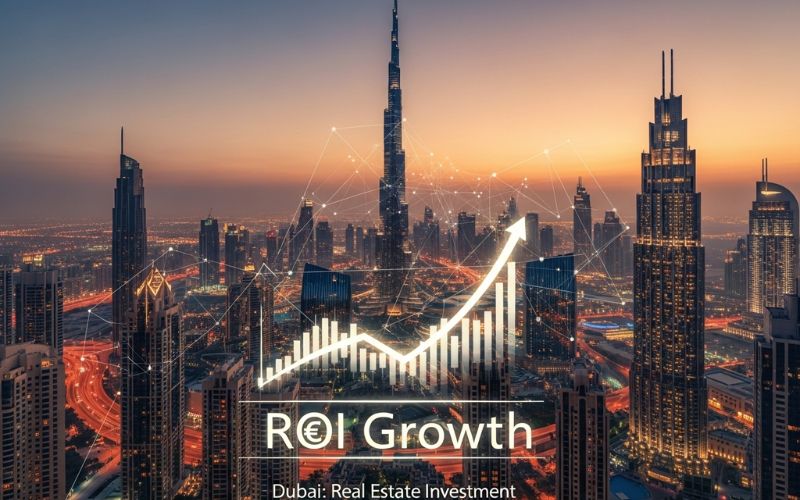
Dubai property appreciated about 16% in the year to Q3 2024 and about 10% in the year to Q3 2025 (Knight Frank), taking prices up roughly 65% over five years on the Property Index. In 2026 the trend reversed: prices are about 3 to 4% below a year earlier (ValuStrat, August: down 3.1%; Property Index, September: down 4.0%).
Capital appreciation, also called capital growth, is the increase in a property's value over the time you hold it, realised when you sell or refinance. It's a different question from rental yield, which is the income a property throws off month to month, and the two don't always favour the same areas. A unit in Jumeirah Village Circle can out-yield one in Downtown while Downtown quietly builds more equity. Which one matters more depends on what you're holding for: cash flow or the exit.
The Property Index, built from Dubai Land Department sales and adjusted for the mix of what sells, is the source of the five-year figure. Knight Frank measures from Q1 2020 and puts apartments up 69% and villas up 124% to Q3 2025. Different indices give different totals, so compare like with like.
Dubai property appreciation rates by year
| Period | Change in prices | Source |
|---|---|---|
| Year to Q3 2024 | About +16% citywide (the recent peak) | Knight Frank |
| Year to Q3 2025 | +10% citywide; apartments +9.6%, villas +12% | Knight Frank, Q3 2025 review |
| August 2026, year on year | Down 3.1% citywide; apartments down 5.3%, villas down 1.7% | ValuStrat |
| August 2026, year on year | Average price AED 1,636 per sq ft, down 1.7% | Cavendish Maxwell |
| September 2026, year on year | Down 4.0% | Property Index |
The Cavendish Maxwell fall is the first annual decline since February 2021. Measured from the end of 2025 rather than from a year ago, S&P Global Ratings put the drop at 5% to 15% by September 2026, quoting industry reports (The National, October 2026). The spread between 1.7% and 15% is mostly about what each source measures and from when.
Current prices by area
Citywide, the median transaction price was about AED 1,650 per square foot in September 2026. Averages run higher (about AED 1,916 in early June) because the mix of what sells skews towards pricier stock. What matters more for an investment decision is the split by area. Property Monitor's DLD transaction data for January to early June 2026 puts it like this:
| Area | Avg. price / sq ft (Jan to early Jun 2026) |
|---|---|
| Palm Jumeirah (apartments) | ~AED 4,240 |
| Downtown Dubai | ~AED 3,011 |
| Business Bay | Up to AED 2,547 (wide range, older vs. new stock) |
| Dubai Marina | ~AED 2,058 |
| Jumeirah Village Circle | AED 1,448 to 1,473 |
The spread inside Business Bay is the useful detail: older towers and newer canal-facing launches can trade far apart per square foot in the same neighbourhood. "Business Bay" as a single data point tells you less than the specific building does. For the area at the top of most buyers' lists, our guide to Downtown Dubai prices and buying costs sets out what an apartment there costs in 2026.
How much the market is actually moving
Transaction volume started 2026 strongly and then faded. The Dubai Land Department recorded AED 252 billion in Q1 2026 transactions, up 31% year-on-year, and AED 419.9 billion across roughly 112,850 transactions for the full first half. In Q1, total investment value rose 22% to AED 173 billion. The first-half figure implies about AED 168 billion in the second quarter, a clear step down from the first. The first-half total includes mortgages and gifts as well as sales. Against the first half of 2025 (AED 431 billion across 125,538 transactions) it is about 3% lower in value, and the second quarter on its own is roughly 30% lower than a year earlier, by our calculation from DLD figures. Sales alone were AED 286.4 billion, about 12% below the first half of 2025. Cavendish Maxwell, which counts residential sales only and runs to August, has values about 24% lower over eight months, so the two measures cover different things and different months.
Prices have followed volume down, though by far less. The Property Index shows September 2026 down 4.0% on a year earlier and 0.5% on the month, and ValuStrat's index was down 3.1% year on year in August, with apartments off 5.3% and villas off 1.7%, the first annual fall for villas since 2021. Both reflect a softer market since the regional conflict began in late February, and ValuStrat puts the fall in capital values since February at 10.2%. Growth is not coming back at the pace of 2021 through 2023 soon, and a flat or slightly negative year after a run this strong is not unusual in a maturing market. Forecasts for the next decade vary widely, so treat any single cumulative number with caution. For the volume side of the story, read how 2026 started strongly and then softened, and our monthly market reports track the price and transaction data as it lands.
Emerging districts are where the spread between areas is widest, but the evidence is thinner. Affordable communities such as Arjan, DAMAC Hills 2 and Dubai South led the gains in 2025, at roughly 9 to 25% off a low base (Gulf News). About 120,000 units across Dubai are also scheduled for handover in 2026 (Fitch, via The National), and heavy new supply can cap price growth where it concentrates. Treat any growth forecast for a single district as a view, not a result.
What's actually driving appreciation
- Infrastructure completing on schedule. Etihad Rail, metro extensions, and the build-out around Expo City and Dubai South convert "planned" into "priced in" as each phase opens.
- The Golden Visa. Ten-year residency through a AED 2 million property investment, with no minimum-stay requirement and since February 2026 no minimum upfront payment on mortgage-financed purchases, keeps pulling in buyers who intend to hold rather than flip.
- Limited freehold supply in the most established districts. Downtown and the Marina aren't adding meaningfully more land, so demand there shows up in price rather than new stock.
- Population growth. Dubai's population is on a trajectory toward roughly 5.8 million by 2040, and housing demand tends to lead that curve, not follow it.
How to read an area for future growth, not past growth
- Infrastructure still under construction beats infrastructure already finished. By the time a metro station opens, its effect on nearby prices is usually already priced in.
- Compare appreciation to rental yield, not just to itself. An area appreciating faster than its rents are rising is being bought for the exit, which is a different risk profile than one where yield and appreciation move together. Our piece on the factors that affect returns on UAE property covers the rest of that picture.
- Look at the building, not just the district. The Business Bay spread above is the clearest example, entry price varies enormously by stock age and specification even within one postcode.
- Entry price still matters. Districts trading meaningfully under AED 1,200 per square foot have more room to re-rate than ones already near their ceiling. Add your buying costs to the entry price before you compare, since the 4% Dubai Land Department fee alone takes a slice of any early gain. Our mortgage calculator shows the cash you need on top of the price.
FAQs
What is the property appreciation rate in Dubai?
It depends on the year. Prices rose about 16% in the year to Q3 2024 and about 10% in the year to Q3 2025 (Knight Frank). In 2026 they are down about 3 to 4% year on year (Property Index, September: down 4.0%; ValuStrat, August: down 3.1%). The table above sets out each period and its source.
Is Dubai real estate still appreciating in 2026?
Not citywide. Prices have slipped since the regional conflict began in late February, and ValuStrat puts capital values 10.2% below February levels. Individual buildings can still move differently, so check recent transactions in the specific building.
What is capital appreciation (capital growth) in Dubai real estate?
The increase in a property's value over the holding period, realised at sale or refinance, as distinct from the rental income it produces along the way.
Which areas have the strongest capital appreciation right now?
Palm Jumeirah and Downtown Dubai command the highest prices per square foot. Affordable communities such as Arjan, DAMAC Hills 2 and Dubai South led the percentage gains in 2025, off a lower base, but 2026 prices have been soft almost everywhere and new supply is arriving, so treat strong growth in any district as a forecast, not a record.
How much has Dubai property appreciated on average?
Roughly 65% over the past five years on the Property Index. Knight Frank measures from Q1 2020 and has apartments up 69% and villas up 124% to Q3 2025. For 2026 specifically, prices are running about 3 to 4% below a year earlier.
Should I buy for appreciation or for rental yield?
They favour different areas. Downtown and the Marina lean toward appreciation with more modest yields; JVC and similar mid-market districts tend to yield more with slower capital growth. Most serious portfolios hold both.
Does the Golden Visa affect property values?
Indirectly, yes. It anchors a category of buyer who is investing for the ten-year residency, not a short-term flip, which supports demand in exactly the freehold areas where visa-eligible investment concentrates.
Where this leaves an investor
Dubai's next few years of appreciation will look nothing like 2021 to 2023, and treating that run as the baseline is the most common mistake we see. After a soft 2026, our read is that a realistic range is flat to low single digit growth citywide, with more variation between individual buildings and districts, and it rewards reading a building's own transaction history over reading a neighbourhood's reputation. If you're weighing where that leaves your own numbers, our district-by-district read of Dubai goes deeper than the averages here, and a conversation with a senior advisor costs nothing to start.