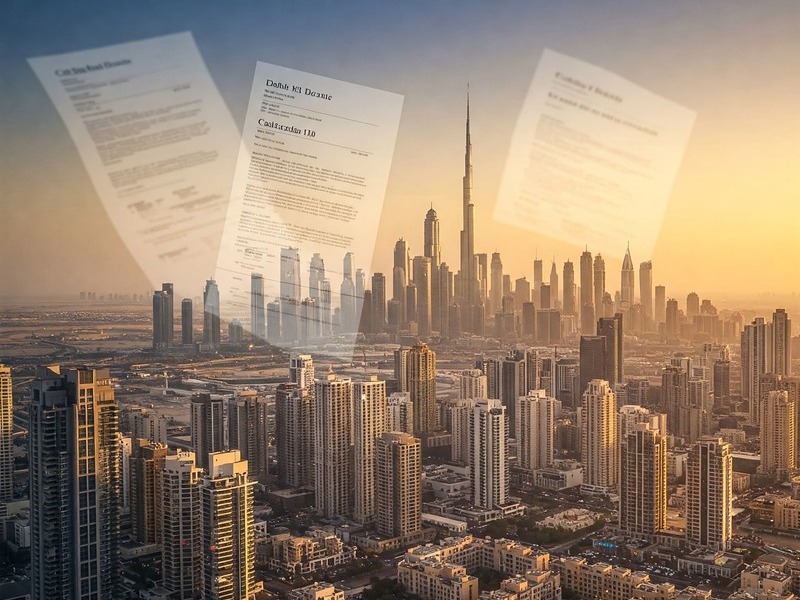

Should You Rent or Buy in Dubai?
Rent or buy? In Dubai the answer depends on how long you plan to stay, how much cash you can commit up front and how much flexibility you want.
Rental stock is deep, with many property types and flats for rent at different budgets and in different locations, from studios for singles to family apartments. Demand for rentals is high. Apartment living suits the city: buildings come with shared amenities, many sit close to the Metro or a main road, and a studio is a popular, affordable and convenient choice for singles and young professionals. An expat looking for apartments for rent in Dubai and an investor weighing off-plan properties in Dubai are asking the same basic question, and the answer rests on three things: financial goals, lifestyle preferences and long-term plans.
This guide sets out the costs, the legal steps and the questions to ask yourself before you decide.
Understanding Dubai’s Real Estate Market in 2026
Dubai’s property market has grown steadily, drawing investors, expats and first-time buyers, and raising interest in real estate management in Dubai. H1 2026 saw AED 419.9 billion in registered transactions (sales, mortgages and gifts) across roughly 112,850 deals, about 3% below the first half of 2025 after a very strong first quarter. Here’s why:
- Stable property prices & high rental yields (Especially in areas like Downtown, Marina, Business Bay, JVC)
- Government incentives for home buyers (the Golden Visa, a renewable 10-year residency for a AED 2 million+ property, with no minimum stay and, since February 2026, no minimum upfront payment on mortgage-financed purchases)
- Flexible payment plans for off-plan properties in Dubai
- High rental demand: many expats prefer renting before buying. Average rents and prices for Dubai apartments vary a lot with size and location. Larger units cost more to rent, and so do prime areas such as Sheikh Zayed Road, which has a dense run of high-rise buildings and key residential neighborhoods.
Bottom Line: Dubai works for both renters & buyers. Which one is right for you depends on your long-term plans.
Apartment Types and Amenities in Dubai
The rental market covers most budgets. You can rent a studio in the heart of Downtown Dubai, a spacious fully furnished apartment in Dubai Marina, or a cheaper unit in International City or Jumeirah Village Circle.
Furnished and fully furnished apartments are widely available across Dubai. They come with living room furniture and kitchen appliances, so you can move in quickly. Unfurnished apartments often rent for less and leave you free to bring your own furniture and decorate as you like.
Studios are compact and cost-effective, which is why singles and young professionals favor them. Larger apartments in family areas such as Jumeirah Village Circle give growing families more room. The price range is wide: International City sits at the affordable end, while the high-rise towers of Dubai Marina and Downtown Dubai hold luxury apartments with city views and on-site facilities.
Amenities range from the basics to swimming pools, fitness centers, children’s play areas and 24-hour security. Many buildings are close to public transport, Metro stations and retail outlets. A fully furnished apartment with everything included and a simple, affordable flat both come down to the same questions: where, how much and what is on site.
When you start looking at apartments in Dubai, rank three things first: location, budget and the amenities you will actually use.
Best Areas to Rent in Dubai
Dubai’s rental market runs from affordable units to high-end apartments in prime locations. Most areas suit a particular kind of renter, whether that is a family, a young professional or someone who wants to be near work: our expat rental roadmap covers the options for anyone looking to rent in Dubai.
Affordable Areas in Dubai
International City is the budget pick. Its housing is cost-effective, its clusters are themed on different countries, and shopping centers such as Dragon Mart are close by. Al Nahda is known for affordable housing, diverse expatriate communities and accessible amenities, which suits families and professionals. Dubai Silicon Oasis is quiet and affordable, with ample amenities.
Many of these neighborhoods are pet friendly, which helps families and pet owners.
Luxury and Premium Areas
At the premium end, Bluewaters Island has high-end, exclusive residences. City Walk combines luxury homes with convenient access to amenities and entertainment. Jumeirah Beach Residence (JBR) pairs a seaside location with upscale living. Palm Jumeirah is a well-established premium community with exclusive amenities. These areas, along with DIFC, suit renters who want comfort and a high-end address.
Here are some of the best areas to consider for apartment rentals in 2026:
Financial Considerations: Costs of Renting vs. Buying
Before you decide, compare monthly costs, upfront expenses (including agent fees for both renting and buying), and long-term benefits.
| Cost Type | Renting | Buying |
|---|---|---|
| Upfront Costs | Security deposit, agent fees | Down payment, agent fees, mortgage fees, transfer fees |
| Monthly Expenses | Rent, utilities, maintenance | Mortgage, service charges, maintenance, utilities |
| Long-Term Costs | Rent increases, renewal fees | Insurance, maintenance, service charge changes |
Some typical figures help to size the upfront gap. On a rental, the security deposit is usually 5% of annual rent for an unfurnished home and 10% for a furnished one, agents commonly charge 5% of annual rent or AED 5,000, whichever is higher, and Ejari registration costs AED 220. On a purchase, the Dubai Land Department charges 4% of the price, plus a registration trustee fee of AED 4,000 (plus VAT) on properties above AED 500,000, and agents typically charge 2% plus VAT. Under Central Bank rules, an expat buying a first home worth up to AED 5 million can borrow at most 80% of the price, which is where the 20% down payment comes from. Our Dubai mortgage calculator shows what that loan costs each month at a given rate and term, which you can set against your rent.
Lease length affects both cost and flexibility. A long term rental can bring substantial savings and more flexible lease terms than a short term rental, which suits people who need temporary accommodation.
On monthly expenses, unfurnished apartments typically rent for less but require you to buy furniture. Furnished, fully furnished and partly furnished options may cost more but save you the effort. Some apartments are chiller free, meaning air conditioning costs are included in the rent, which can lower your utility bills.
Renting vs. Buying: Cost Breakdown
| Expense | Renting a Property | Buying a Property |
| Upfront Costs | 5% Security Deposit + Agent Fee | 20% Down Payment + DLD Fees |
| Monthly Expenses | Fixed rent | Mortgage + Maintenance |
| Flexibility | Can relocate anytime | Long-term commitment |
| Wealth Building | No return on rent | Builds equity & property value |
| Visa Benefits | No impact on residency | A AED 2M+ purchase can qualify for the 10-year UAE Golden Visa |
Who Should Rent?
- Expats with short-term plans (1-3 years)
- Those saving up for a down payment
- People who prefer flexibility over commitment
Who Should Buy?
- Long-term residents & investors
- Buyers looking for rental income (High ROI in Dubai Marina, JVC, Downtown)
- Those wanting off-plan properties in Dubai with flexible payment plans
Pro Tip: If you’re staying in Dubai for 5+ years, it’s often cheaper to buy than rent. If you are leaning towards buying, it is also worth reviewing the mortgage transfer process in Dubai for 2025.
Lifestyle & Flexibility: Which Option Suits You Best?
Your lifestyle shapes the answer.
A short term apartment or short term flat gives you more space and privacy than a hotel room. It usually has its own kitchen, a separate sleeping area, kitchen appliances and the other basics for a comfortable stay.
| Factor | Best for Renters | Best for Buyers |
|---|---|---|
| Flexibility | Can move anytime | Long-term commitment |
| Job Stability | Uncertain career plans | Stable income & long-term stay |
| Customization | Limited (Landlord restrictions) | Full ownership & renovations |
| Property Type | Apartments in city centers | Villas, off-plan, or luxury properties |
Expats & frequent travelers often rent for convenience. Families & professionals prefer buying for long-term stability.
Pro Tip: If you’re unsure, start with renting and buy later when you’re financially ready.
Legal Aspects & Documentation: What You Need to Know
Both renting & buying involve specific legal steps & paperwork.
Here’s what tenants typically need:
- Passport copy
- Visa copy
- Emirates ID
- Security deposit
- Signed tenancy contract
- Agent fees (if applicable)
- In some cases, tenants also need to set up accounts with the utility company and water authority to pay utility bills, including AC bills and Dubai electricity, unless these are included in the rent.
Furnished apartments can also save tenants the hassle of shipping furniture.
Renting in Dubai: What Tenants Need
- Ejari Registration (Mandatory for all rentals)
- Security Deposit (Usually 5% of annual rent)
- RERA Tenancy Contract (Landlord must register)
- Renewal & Rent Increase Laws (Follow RERA’s Rental Index)
Buying a Property: Key Legal Steps
- Find a RERA-Licensed Real Estate Agent
- Sign a Memorandum of Understanding (MOU) with Seller
- Pay Dubai Land Department (DLD) Fees (4% of property price)
- Mortgage Pre-Approval (For financing buyers)
- Receive Title Deed & Register Property
Pro Tip: Always work with trusted real estate brokers in Dubai to avoid legal issues.
Making the Right Decision: Key Factors to Consider
Still unsure whether to rent or buy in Dubai? Ask yourself these 5 questions:
1️⃣ How long do I plan to stay in Dubai?
- Short-term (1-3 years)? → Renting is better
- Long-term (5+ years)? → Buying makes more sense
2️⃣ Do I have enough savings for a down payment?
- If yes, buying is a sound option
- If no, renting is a better short-term solution
3️⃣ Do I want to build wealth through property?
- Buying lets you own an appreciating asset
- Renting means you pay for someone else’s mortgage
4️⃣ What’s my financial situation?
- Buying has upfront costs but long-term savings
- Renting requires less commitment & no long-term debt
5️⃣ Am I ready for property maintenance & legal responsibilities?
- Owners must handle all repairs & fees
- Renters just pay rent & move out if needed
Apartment types vary widely across the city, and some communities, such as International City, are themed on different countries. In Downtown Dubai, cultural venues such as Dubai Opera and its surrounding art galleries are part of what draws residents to the neighborhood.
Bottom Line: If you’re financially stable & plan to stay in Dubai long-term, buying makes sense. If you need flexibility, renting is the safer choice.
FAQ’s
1. Should I rent or buy in Dubai as an expat?
If you plan to stay for 1 to 3 years, renting offers flexibility without a long-term financial burden. If your stay is 5+ years, buying typically becomes more cost-effective, builds equity and may qualify you for long-term residency such as a Golden Visa.
2. How long should I stay in Dubai before buying property?
Generally, 5 years is the break-even point. Studies show that if you live in the property long enough to offset the upfront costs (down payment, DLD fees, service charges), buying becomes financially smarter than renting.
3. What are the hidden costs of buying vs renting in Dubai?
Renting often includes Ejari registration, security deposit, DEWA deposits, and agency fees. Buying adds Dubai Land Department (DLD) fees (4%), mortgage setup fees, service charges, and property maintenance.
4. Is renting cheaper than buying in Dubai right now?
It depends. Renting gives you predictable monthly costs, which suits a short stay. But in areas like Downtown or Marina, buying with an affordable mortgage rate may cost less over time, especially if you plan to stay longer.
5. Can renting help me get a UAE visa?
Yes, you can secure a residence visa based on a rental contract, provided it’s Ejari-registered. You can live and work in the UAE on that visa without owning property.
6. Which areas are best to rent or buy in Dubai in 2026?
Top rental spots include JLT, Business Bay, and Al Barsha. For long-term investment, condos in Downtown, Dubai Marina, and JVC offer strong appreciation and rentability.
7. Do mortgage rates make buying more affordable than renting?
Current mortgage rates (around 3 to 5%) plus long-term principal repayment often make monthly buying costs comparable to renting. As equity builds, the case for renting weakens.
8. What’s the process difference between renting and buying in Dubai?
Renting involves Ejari registration, occasional rent increases, and security deposits. Buying entails property search, MOU signing, DLD registration, mortgage setup, Title Deed transfer, and often a sizeable down payment.
9. Can I switch from renting to buying later in Dubai?
Yes. Many expats rent for 1 to 2 years to test neighborhoods before committing to buy. That gives you time to save, to see how the area fits your life, and to get your mortgage in order.
10. Are landlords responsible for maintenance compared to homeowners?
Yes, landlords usually handle major structural repairs and public area upkeep, but renters cover minor issues and appliances (unless otherwise agreed). Homeowners carry all maintenance costs, which gives you full control but more responsibility.
Should You Rent or Buy in Dubai?
Both renting & buying have pros and cons. Your choice should rest on your budget, lifestyle and long-term plans.
To rent an apartment in Dubai, browse our listings. To test the numbers on a purchase, use a mortgage loan calculator Dubai. To buy, look at off-plan properties in Dubai & ready homes for sale.
Contact Splendor.ae to talk through your numbers with an adviser.